

How to Prepare Your Business for Sale in Texas

Schedule a free consultation with Seamless Advisors to start preparing your business for sale in Texas today. Our M&A experts will walk you through every step of the process.
To prepare your business for sale in Texas, you must organize your financial records, obtain a professional valuation, and assemble an experienced advisory team. Buyers and SBA lenders typically require three years of clean, normalized financial statements and reconciled tax returns to confirm your profit margins. You also need to plan for tax implications, since Texas has no state income tax but federal capital gains taxes still apply to the sale. Working with professionals who offer Texas business advisory services can help you structure the deal properly and maximize your proceeds. This strategic preparation usually takes six to twelve months before you list your company on the market.
As you begin this transition, getting your financial house in order is the first critical step to attract qualified buyers. Preparing your financials early will help you justify your asking price and speed up the due diligence process.
Get Your Financial House in Order
Preparing your financial records is the foundation of any business sale. Buyers require three years of clean financial statements and tax returns. Normalized earnings to show true Seller's Discretionary Earnings, a fully reconciled balance sheet, and SBA-ready cash flow documentation. Without these, your company's value drops or the deal stalls entirely.
Clean books are the foundation of any successful company sale. When you prepare your business for sale in Texas, you must show buyers that your numbers are real and stable. Buyers and lenders will look closely at your financial past to check for risks and to find true profit trends.
Most buyers require at least three years of clean, clear financial statements and federal tax returns. If your books are messy, it can lower your company value or even stop a deal. Taking time to organize your files now ensures you are ready when a buyer makes an offer.
Three Years of Clean Statements
You need to prepare a full package of your profit and loss statements, balance sheets, and cash flow reports. These documents must match your tax returns exactly. Working with experts on preparing financial statements for sale can help you find and fix errors before buyers see them. The clearer your records are, the more confidence a prospective buyer will have in your numbers.
Normalize Your Earnings
Buyers want to see the true earning power of your business, which is often shown as Seller discretionary earnings. To show this, you need to add back one-time costs, owner perks, and personal travel expenses to your net profit. This step is key because it reveals how much money a new owner can expect to make each year. Think of it as stripping away the noise so the real engine is visible.
Reconcile Your Balance Sheet
A clean balance sheet shows that your company has no hidden debts or risks. You must reconcile all bank accounts, pay off small old debts, and verify all inventory values. Doing this work early shows buyers that your asset and debt numbers are fully accurate and trustworthy. A well-prepared balance sheet also speeds up the due diligence phase considerably.
SBA Loan Requirements
Many business sales in Texas rely on Small Business Administration loans to fund the deal. Lenders who back these loans have strict rules and will look at your past tax returns to verify your income. To qualify, you must show clean tax filings that prove your business has enough cash flow to cover the new debt payments. Reviewing your tax and financial planning strategy early can prevent surprises when the lender reviews your file.
- Gather Three Years of Financial Records: Collect all profit statements, tax returns, and balance sheets. Work with a professional to verify that these files match and have no errors.
- Normalize Your Net Income: List all owner perks, non-business expenses, and one-time costs. Add these back to your profit to show the true earning power of the company.
- Reconcile All Accounts: Clean up your balance sheet by checking all bank accounts, debts, and asset values. Remove old or unused items to make the ledger clear.
- Prepare for SBA Financing: Keep tax returns simple and clear to help buyers get loans. Check the Small Business Administration guidelines to make sure your cash flow meets lender standards.

What Is Your Business Worth?
Knowing your company's true value before listing prevents costly pricing mistakes and prepares you for buyer scrutiny. Professional valuation uses three approaches: asset-based, market comparison, and income projection. An Accredited in Business Valuation (ABV) credential ensures the report holds up in negotiations and bank reviews. Industry multiples typically range from 3-6 times SDE for small businesses to 4-8 times EBITDA for mid-market firms.
Before you list your firm, you must know its true worth. A clear valuation helps you set a fair price and avoid costly delays. Engaging qualified business valuation services in Texas early lets you prepare your business for sale in Texas with confidence. Getting an early estimate of your company's value lets you fix weak spots and boost your profit before buyers look at your books.
Three Ways to Value Your Firm
Valuation experts look at your company from three main angles to find its fair price. First, they use the asset approach to add up the value of all physical and digital items you own. Second, they use the market approach to compare your sales and profits with similar firms in your field. Third, they use the income approach to estimate your future cash flows based on what you earn now. You can learn more about these standard business models from the U.S. Small Business Administration website.
Why ABV Credentials Matter
Not all valuations are the same in the eyes of buyers and banks. You need a report that holds up during tough deal talks and bank reviews. An Accredited in Business Valuation (ABV) credential is a professional mark from the American Institute of CPAs. Valuation experts with an ABV have passed strict tests and proved their deep skills in finance. Our advisors hold these top credentials to give you a clear, solid report you can trust. To learn more about the team behind these credentials, visit our Seamless Advisors team page.
How Industry Multiples Work
Buyers use different profit metrics to figure out what to pay depending on the size of your company. Small main street shops often sell for a multiple of their Seller's Discretionary Earnings (SDE). These SDE multiples typically range from 3 to 6 times your yearly earnings. Larger mid-market firms are valued based on their EBITDA instead. These bigger deals usually command multiples between 4 and 8 times EBITDA. Your field, brand strength, and growth rate will dictate where you fall on this scale.
Why Get Valued Early
Do not wait until the last minute to get a valuation report. You should start this process 12 to 24 months before you plan to sell. This lead time lets you spot leaks in your cash flow and build a stronger track record. If a buyer points out a weak spot, you will have the data and time to fix it before you sign any deal documents. Early preparation also gives you leverage in negotiations because you already know exactly what your business is worth.
How Do You Build Your Exit Team?
A successful business sale requires a core advisory group: a CPA with M&A experience. A business attorney familiar with Texas deal law, and a broker or investment banker to manage the marketing and negotiation process. The team also handles critical steps like obtaining a Certificate of No Tax Due from the Texas Comptroller. Which protects the buyer from inheriting unpaid state taxes and prevents last-minute deal delays.
Selling a company is not a solo effort. To prepare your business for sale in Texas, you must assemble a group of advisors who know how to protect your wealth and limit your liabilities. Each member of this deal team has a specific role in the transaction process. Working with local specialists ensures your deal aligns with state laws and tax rules.
Your Core Advisory Group
Your team should include a Certified Public Accountant (CPA), an M&A attorney, and a business broker or investment banker. A specialized M&A CPA helps you clean up your balance sheet and find hidden tax risks before a buyer does. Your broker manages the marketing process, finds qualified buyers, and guides negotiations to keep the deal on track. You may also need a valuation specialist to establish a realistic market price for your company.
To ensure your business is fully prepared for this process, you can use Seamless transaction readiness services to find and fix operational gaps. Preparing early gives your team the time they need to build a strong transaction structure. You can also learn more about our advisory pricing and service packages to see which level of support fits your needs.
The Value of Texas Legal Expertise
Texas law has specific rules that affect how deals are structured and closed. An M&A attorney with local knowledge is vital when choosing between an asset sale and an equity sale. In an equity sale, the buyer purchases the legal entity itself, including all of its past liabilities. In an asset sale, the buyer only purchases specific assets like equipment, inventory, and customer lists.
Most small business sales in the state are structured as asset sales. This structure protects the buyer from prior business liabilities and allows them to step up the tax basis of the assets they purchase. Your attorney will draft the purchase agreement to match these structural needs while protecting your personal interests.
The Certificate of No Tax Due Rule
When you sell business assets in Texas, you must address state tax liabilities. Purchasers of a Texas business can be held liable for unpaid state taxes. Interest and penalties if they fail to obtain a Certificate of No Tax Due from the Texas Comptroller before closing. This rule is outlined under guidelines from the Texas Comptroller of Public Accounts.
To prevent this risk, the buyer and seller must jointly submit Form 86-114 to request this clearance. If you do not get this certificate, the buyer may hold back a portion of the purchase price at closing to cover potential tax debts. Your CPA and attorney will coordinate this step to ensure a smooth transition of ownership.
Plan Your Exit Timeline
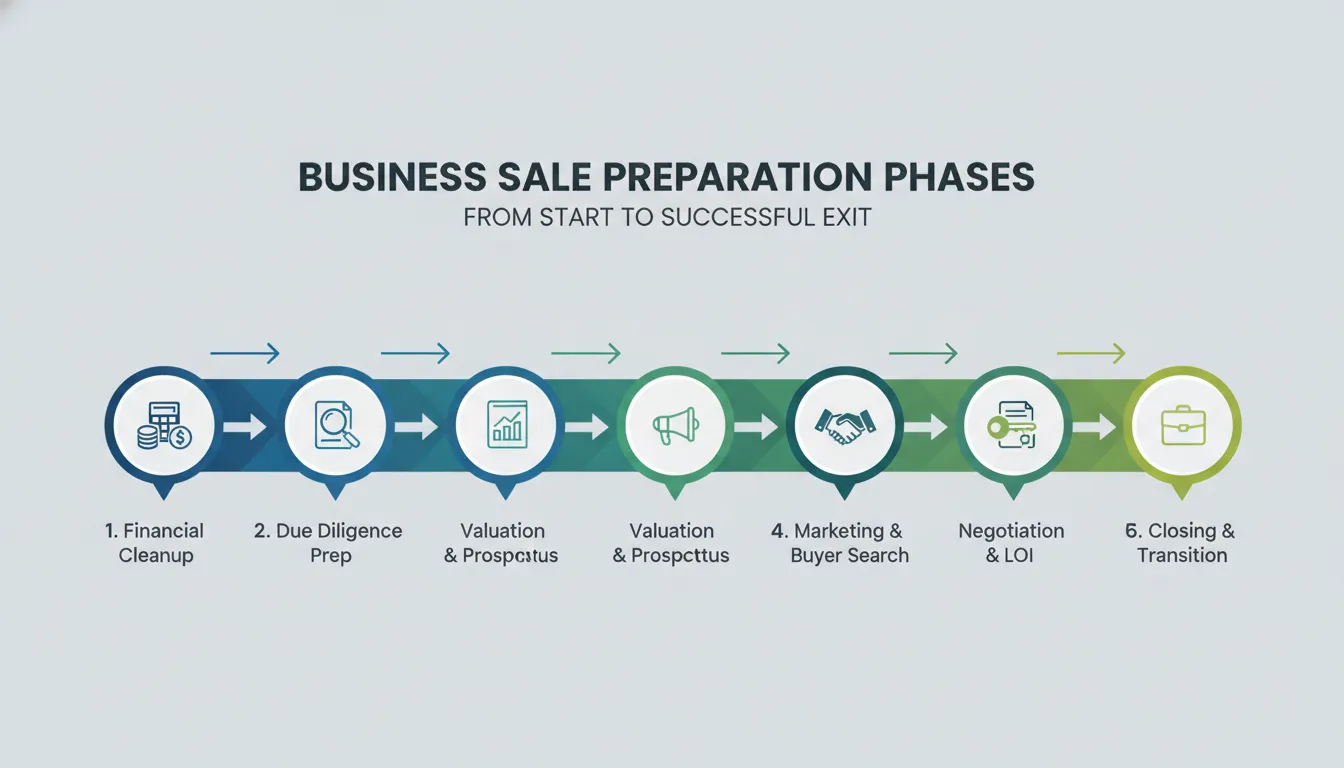
A well-timed exit starts 12 to 24 months before listing. This window allows you to obtain a valuation, clean up financial records, assemble your advisory team, market the business to qualified buyers, and navigate the due diligence phase. Most sales take 6 to 12 months from listing to closing, with smaller deals moving faster and larger deals taking longer. Market conditions like interest rates and industry demand also affect your timeline.
Selling a company is a major journey that takes careful timing. If you want to prepare your business for sale in Texas, you must know how long each phase takes. Starting early gives you the best chance to clean up books, fix operations, and find the right deal team. A rushed sale often leads to a lower price or bad deal terms.
The Value of Early Preparation
Most experts agree you should start your planning early. You should begin preparing 12 to 24 months before you list the business. This wide window lets you spot and fix problems before buyers see them. If you rush, you may leave money on the table. A long lead time helps you build a strong track record of sales and profits.
The Typical Process Window
Once your company is on the market, the actual sale process has its own timeline. The sale typically takes 6 to 12 months from preparation to closing. For very small deals under 500,000 dollars, the sale may close in 3 to 6 months. Mid-market deals between 500,000 dollars and 2 million dollars often take 6 to 9 months. Larger deals over 5 million dollars usually take 9 to 12 months or longer because of complex checks.
Your Step-by-Step Exit Timeline
A successful exit follows a clear path of milestones. Here is the step-by-step roadmap you need to follow to secure a great deal:
- Months 12 to 24 (Get a Valuation): Obtain a professional business valuation to find your baseline worth. You can read about business valuation services in Texas to see how experts price a company.
- Months 6 to 12 (Clean up Financials): Reconcile your balance sheets and organize three years of tax records. This clean history is vital if your buyer needs federal funding through the U.S. Small Business Administration.
- Months 3 to 6 (Assemble Your Team): Hire an M&A broker, a CPA, and an attorney to draft your sale documents.
- Months 1 to 3 (Market the Business): Create your marketing materials and present the company to qualified buyers. Work with Seamless transaction readiness experts to prepare a compelling prospectus.
- Closing (Due Diligence): Allow the buyer to audit your books, sign the final contract, and close the deal.
How Market Cycles Affect Your Sale
Local and national market trends will shift your exit plan. High interest rates can slow down sales because loans cost more for buyers. Industry growth can also speed up your timeline if many buyers want to enter your field. Keep an eye on Texas economic cycles so you can list your company when demand is high.
Navigate Texas Tax Implications
Texas has no state personal income tax, which gives sellers a significant advantage over business owners in other states. However, federal capital gains taxes still apply, and the choice between an asset sale and an equity sale dramatically affects your final tax bill. Asset sales typically favor buyers with stepped-up depreciation, while equity sales favor sellers with lower capital gains rates. A Certificate of No Tax Due from the Texas Comptroller is required before closing to clear any prior state tax liabilities.
When you prepare your business for sale in Texas, you must understand how local and federal tax rules affect your final payout. While Texas offers a highly favorable business climate, structured planning is key to keeping more of your hard-earned wealth. Making the right choices early in the transaction process will save you from costly surprises at closing.
Understand the Texas Tax Advantage
Texas does not have a state personal income tax. This lack of a state income tax is a massive benefit that helps both buyers and sellers keep more money from the sale. Federal capital gains rates still apply to your proceeds, but you will not face an extra state tax bill on your gains as you would in other states.
Sellers must still manage other state obligations to protect their deal. For example, a business sales tax permit in Texas is not transferable to a new owner. The buyer must apply for their own permit, and you must formally close your account to avoid future liability. Working with advisors who understand these local steps will help you smoothly navigate the tax implications for business owners and set up a clean handoff.
Compare Asset and Equity Deals
The legal structure of your transaction has a huge impact on your final tax bill. Most small business sales are set up as either an asset sale or an equity sale. Each path distributes the tax burden differently between you and the buyer.
| Sale Type | Tax Treatment for Seller | Tax Treatment for Buyer | Common Texas Preference |
|---|---|---|---|
| Asset Sale | Taxes vary based on asset class, with some gains taxed at ordinary income rates. | Allows the buyer to step up the basis of assets and claim higher depreciation write-offs. | Preferred by buyers to lower risk and get higher tax breaks. |
| Equity Sale | Most or all gains are taxed at lower federal capital gains rates. | The buyer inherits the historical tax basis of the assets and cannot step them up. | Preferred by sellers to minimize federal tax rates. |
In an asset sale, the purchase price is split across different asset groups, which can trigger ordinary income tax on items like inventory. In contrast, an equity sale usually lets you treat the entire gain under lower federal capital gains tax rates. Buyers usually prefer asset sales to reduce their legal risk and get immediate tax depreciation benefits.
Obtain a Certificate of No Tax Due
Texas state law puts a unique duty on the buyer during a business sale. Buyers of a Texas business are liable for unpaid state taxes, interest, and penalties if they fail to get a Certificate of No Tax Due from the Texas Comptroller before closing. This rule protects the buyer from inheriting your old state tax debts.
To get this document, you and the buyer must submit a joint request using Form 86-114. If the Comptroller finds unpaid sales or franchise taxes, you must pay them before they will issue the certificate. Clearing these liabilities early prevents deal delays and assures the buyer that the business is clean. While this certificate protects the buyer, sellers remain fully responsible for any tax liabilities that occurred before the sale date.
Contact Seamless Advisors today for professional guidance on structuring your business sale to minimize tax liability and maximize your proceeds.
Why Being Transaction Ready Matters Even Before You Sell
Transaction readiness is not just for active sellers. Running your business with clean financial records, documented workflows, and disciplined management makes the company more profitable today and easier to sell tomorrow. It also unlocks growth capital by proving to lenders that your cash flow and balance sheet are reliable. Preparation removes the guesswork from daily decisions and transforms due diligence from a scramble into a smooth process.
Preparing your company for a transfer of ownership is not just a task for active sellers. At Seamless, we teach business owners that transaction readiness is a daily operating model. Taking steps to prepare your business for sale in Texas builds a stronger and more resilient company today. When you build with a clear exit in mind, you remove day-to-day chaos, reduce risk, and make your business much easier to run.
Improving Your Daily Business Operations
A business that is ready for a deal is a business that runs with absolute precision. Clean accounting records and documented workflows make daily decisions easier for you and your management team. This operational discipline is key when you want to secure capital or build better relationships with local lenders. The Small Business Administration notes that clean records and strong cash flow are the basis of solid business growth. You can learn more about general planning guidelines directly on the SBA business management page.
When your financial systems are clear, you no longer rely on guesswork to make decisions. You can spot rising costs quickly, track your margins in real time, and adjust your prices before your profits shrink. This proactive style of management keeps your company healthy through changing economic cycles. It also makes your business much more attractive to future partners or buyers who want to see a history of strong management.
Unlocking Growth and Capital Opportunities
Many owners do not realize that being ready for a transaction makes it much easier to get funding. Lenders and private investors look at your books with the same strict eyes as a buyer would. If your balance sheet is messy or your tax filings are behind, getting a loan will be difficult or very expensive. Working on your financial health now means you can jump on new opportunities the moment they show up. It gives you the power to negotiate better terms with banks because you have the data to prove your business is a safe bet.
This financial strength helps you fund key expansion projects without putting too much stress on your cash flow. Whether you want to buy new equipment, hire top talent, or expand your service area, having clean books is a major benefit. To achieve this level of financial clarity, many business owners use professional fractional CFO services for business growth to modernize their reporting systems. These services help you find and fix accounting errors before they can hurt your growth plans.
Reducing Stress and Preparing for the Future
Due diligence is often the most stressful part of selling a business. When a buyer submits an offer, they will ask for years of detailed records, tax returns, and legal contracts. If you have to scramble to find these files, you risk losing the deal entirely or facing huge price cuts. Starting this work early lets you organize your documents at your own pace without the pressure of a ticking clock. It turns a rushed and painful process into a smooth and calm transition when the right offer finally arrives.
Being transaction-ready also protects your family and your legacy if you face an unexpected life event. If you need to step away from the business quickly, your managers or family can keep things running without a drop in performance. A company with clear processes and clean books can survive a sudden change in leadership because the systems are already in place. This is the ultimate gift of preparation and it is within reach for every business owner who takes the first step. To get started on your readiness journey, reach out to the Seamless team.
Talk to a Seamless M&A advisor today to assess your company's transaction readiness and start the preparation process with confidence.
Frequently Asked Questions
How long does it take to prepare a business for sale in Texas?
Most experts recommend starting 12 to 24 months before you plan to list your business. The actual sale process from listing to closing typically takes 6 to 12 months. Smaller deals under $500,000 may close in 3 to 6 months, while larger deals over $5 million often take 9 to 12 months or longer.
What financial documents do I need to sell my business in Texas?
Buyers and lenders typically require three years of profit and loss statements, balance sheets, cash flow reports, and federal tax returns. These documents must match each other and be reconciled with your bank accounts and inventory records.
Do I need a lawyer to sell my business in Texas?
Yes. An M&A attorney with Texas experience is essential to protect your interests, especially when deciding between an asset sale and an equity sale. They also help you navigate requirements like the Certificate of No Tax Due from the Texas Comptroller.
How are business sale profits taxed in Texas?
Texas has no state personal income tax, so you will not pay state tax on your gains. Federal capital gains taxes still apply. The rate depends on whether your sale is structured as an asset sale (some gains taxed at ordinary income rates) or an equity sale (typically all gains taxed at lower capital gains rates).
What is the Certificate of No Tax Due in Texas?
It is a document from the Texas Comptroller confirming the business has no unpaid state taxes. The buyer and seller must jointly request it using Form 86-114 before closing. Without it, the buyer can be held liable for your prior state tax debts.
Can I sell a Texas business without a broker?
Yes, you can sell without a broker, but most business owners benefit from professional representation. A broker or investment banker handles marketing, qualifies buyers, and negotiates terms. They also help maintain confidentiality throughout the sale process.
Ready to prepare your business for sale in Texas?
Getting your company ready for sale is one of the most important financial moves you will ever make. The process takes time, expertise, and the right team in your corner. At Seamless, we have guided hundreds of Texas business owners through every phase of the exit journey, from financial preparation to closing.
Whether you are planning to sell in six months or two years, the best time to start preparing is today. Schedule a free consultation with Seamless Advisors to discuss your business goals and create a tailored preparation plan. Call us at (469) 975-3435 to speak directly with one of our M&A specialists.